Portraits and Masculinity
Native American Portraits
During the 19th century, Native Americans played an integral role in Midwestern culture and development. They were essential to the development of the West, especially in places like Missouri. Their roles as fur traders and explorers assisted in expanding the economy of the US. Native Americans were indispensable in events like the negotiation of the Louisiana Purchase, and without them America would not be the same. The purpose of including these portraits is to provide a contrast to the previous portrait selections,and illustrate culturally different contemporaneous masculinity. The portraits of men previously analyzed were a result of a long line artistic devices utilized to convey messages about masculinity. When considering representations of Native Americans painted during this time period, one must take into account the role colonialism played in relationships between Native Americans and Westerners. This translated to what is called the colonial gaze. The colonial gaze can be thought of as visual strategies used to reaffirm colonial dominance over other races. However, this gaze is not present in the following portraits, as sitters are allowed to maintain their autonomy and masculinity through the way they are rendered.
Charles Deas Portraits of Natives
Charles Deas was an American painter who was acclaimed for his paintings of fur traders and Native Americans in the mid 19th century. The Mercantile Library Art Museum possesses four of his renderings of Native Americans. These portraits are quite interesting, not only because of Deas’ art style, but also because of what they say about Native American masculinity. He utilizes portrait techniques similar to those previously described and places them on non-Western subjects. He avoids using the colonial gaze through rendering them as individuals and not caricatures of their Native American race.
Winnebago with Bear-Claw Necklace and Spear, Charles Deas, 1842
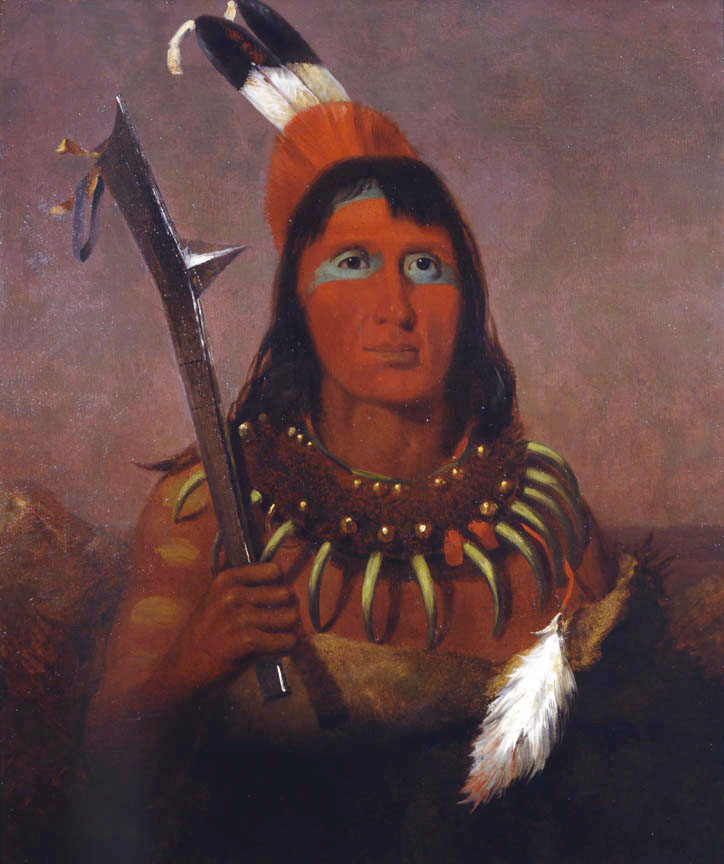
In this portrait, a Native American can be seen clad in traditional native garb, holding a weapon in his right hand. The term “Winnebago” refers to the sitter’s tribe. In deciphering the meaning of Charles Deas’ Native American portraiture, we must consider the objects held by their sitters In this portrait, the sitter is wearing a bear claw necklace and holding a Native American weapon. The weapon he holds is a gunstock war club, which is understated by the slight smirk the sitter adorns. Despite the fact he is rendered holding a weapon, his expression is warm and welcoming. His holding a weapon alludes to his possibly being a warrior. The bear claw necklace he wears also holds significance, and is another element that conveys his identity to viewers. The necklace could allude to his strength and power, bears thought to be physically imposing and vicious creatures, and here he is depicted wearing the claws of one. The sitters war paint, bear claw necklace, and a weapon are symbols of Native masculinity.
Winnebago with Peace Medal and Pipe, Charles Deas, 1842
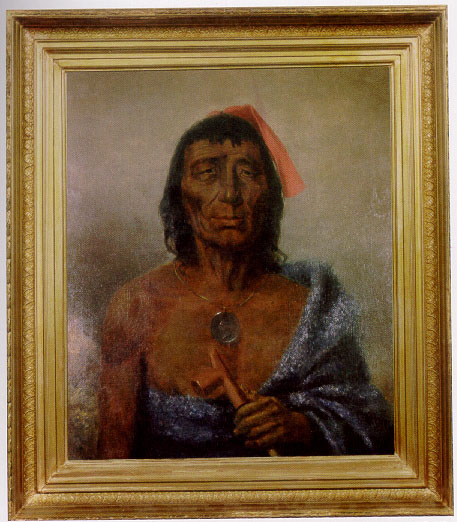
In this painting, Deas depicts another Winnebago Native. Depicting his age through the rendering of his wrinkles conveys his wisdom. A peace medal adorns his neck, and his expression is somewhat weary, yet warm. He is also adorns a gray shawl, possibly made from a type of animal. In his left hand, he holds a Native peace pipe. He is accompanied by two symbols of peace, a peace medal and a peace pipe. Peace medals were a method for America to forge relationships with Native Americans, especially during early expeditions. They were primarily given to members of the tribe who had a high ranking, such as chiefs. The peace pipes were traditionally utilized during treaty ceremonies. They were actually sacred objects, and represented a connection with “spirit power”. The identity of this sitter is presented through his age and the objects that surround him. His masculine traits are translated through his wisdom and leadership capability, which is communicated through his age and use of peace pipe and medal.
Winnebago with Bear claw Necklace and Spear, 1842
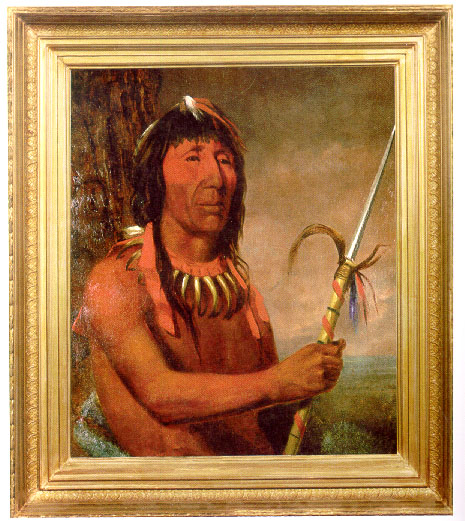
This portrait is similar to the first native portrait analyzed, with similar red war paint and held weapon. These details signify his status as a warrior of his tribe. This contrasts the soft, relaxed expression on his face. This sitter is also depicted with a bear claw necklace, which also points to his position as a warrior when coupled with the use of the spear. The spear could have been created from the bayonet of a Western soldier. Was the bayonet given to him? Or is it evidence of a battle won, similar to the bear claw necklace? Similar to the other native portraits in this exhibit, this sitter is depicted only 3/4ths up. This differs from the way in which his Western contemporaries were mostly depicted with their full physicality. This could be thought to diminish the sitters, however, depicting the Natives in such a way emphasizes their musculature, and subsequently their virility.
Winnebago(Wa-kon-cha-hi-re-ga)in a Bark Lodge , Charles Deas, ca 1842
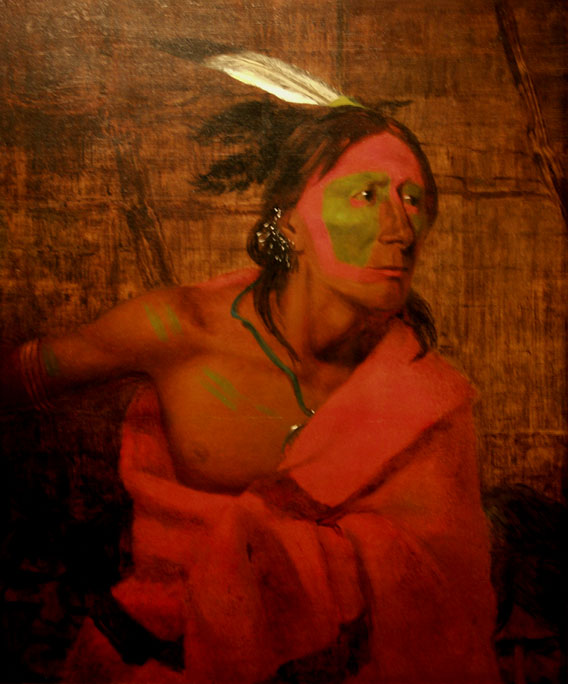
Deas depicts a Winnebago chief in a bark log. The fact that Deas decides to depict a specific location, and a natural one at that, allude to the sitter’s significance. The sitter’s appearance is very striking, painted with vibrant hues of red and green. The red blanket in addition to his face paint provides a stark contrast to the rest of the painting. This contrast makes it difficult to notice one of the most important details of this painting; the images of the other natives in the lower portion of the painting. This detail alludes to the fact that the sitter holds a higher position in his tribe. His gaze is indicative of a leader, appearing as if he is looking toward the future of his people. This sitter’s masculinity is portrayed through his heightened position in his tribe. Leadership is a trait traditionally associated with masculinity. His stern expression, rebellious posture, and distant gaze are all traits traditionally associated with masculinity and male identity.
No-way-Ke-Sug-Ga, Charles Bird King, ca 1826
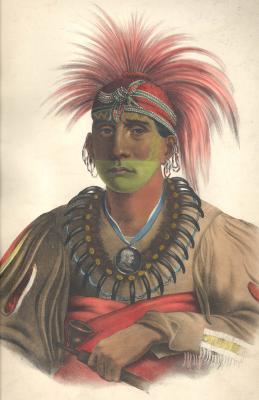
Charles Bird King was another artist known for his portraits of Native Americans during the 19th century. King rendered over 100 artworks of Native Americans as part of a government funded operation to create a collection of Native portraits. Here, he renders chief No-way- Ke-Su-Ga. The chief is painted with a flamboyant headdress and face paint of green hues, deviating from the reds used by the Winnebago tribe. His leadership status is signified through his wearing a peace medal, which were given exclusively to Native Americans during the 1800s. Similarly to two of Deas portraits above, the sitter is depicted wearing a bear claw necklace, alluding to his virility as a powerful warrior. He also holds a peace pipe, which further signify his higher status in his tribe. His gaze is confrontational, boring into the viewer from the picture plane.
Conclusion
The Mercantile’s 19th century portrait collection reveal the complexities present in American masculinity. Presenting portraits of Westerners and Natives provides a contrast to different types of Western masculinity in the 19th century. Western male masculinity in 19th century art was associated with leadership and gentleman-hood. Similarly, 19th Native American portraiture conveyed similar messages through the use of culturally different signifiers.
